
What Pratt County Deed Records Show
A recorded deed names the grantor and grantee, describes the land, and states the conveyance type. It also carries a recording date and reference. Read the deed itself.
| Deed Type | What It Does | Common Use |
|---|---|---|
| Warranty deed | Conveys the stated interest with title covenants | Conventional sale |
| Quitclaim deed | Conveys whatever interest the grantor holds | Family transfer or interest cleanup |
| Trustee or fiduciary deed | Conveys through an authorized representative | Trust or estate administration |
| Sheriff's deed | Records a conveyance following judicial process | Confirmed foreclosure sale |
| Tax-related deed | Documents the completed tax-sale disposition | Delinquent-tax proceeding |
A mortgage or lien burdens an interest. It does not transfer ownership. Old ones often disappear through a release or assignment, so search for those later instruments before assuming an encumbrance still binds a parcel. Pratt County also records easements, leases, powers of attorney, plats, and UCC fixture filings that can affect the same land.
Pratt County's CIC Index Has an Unpublished Cutoff
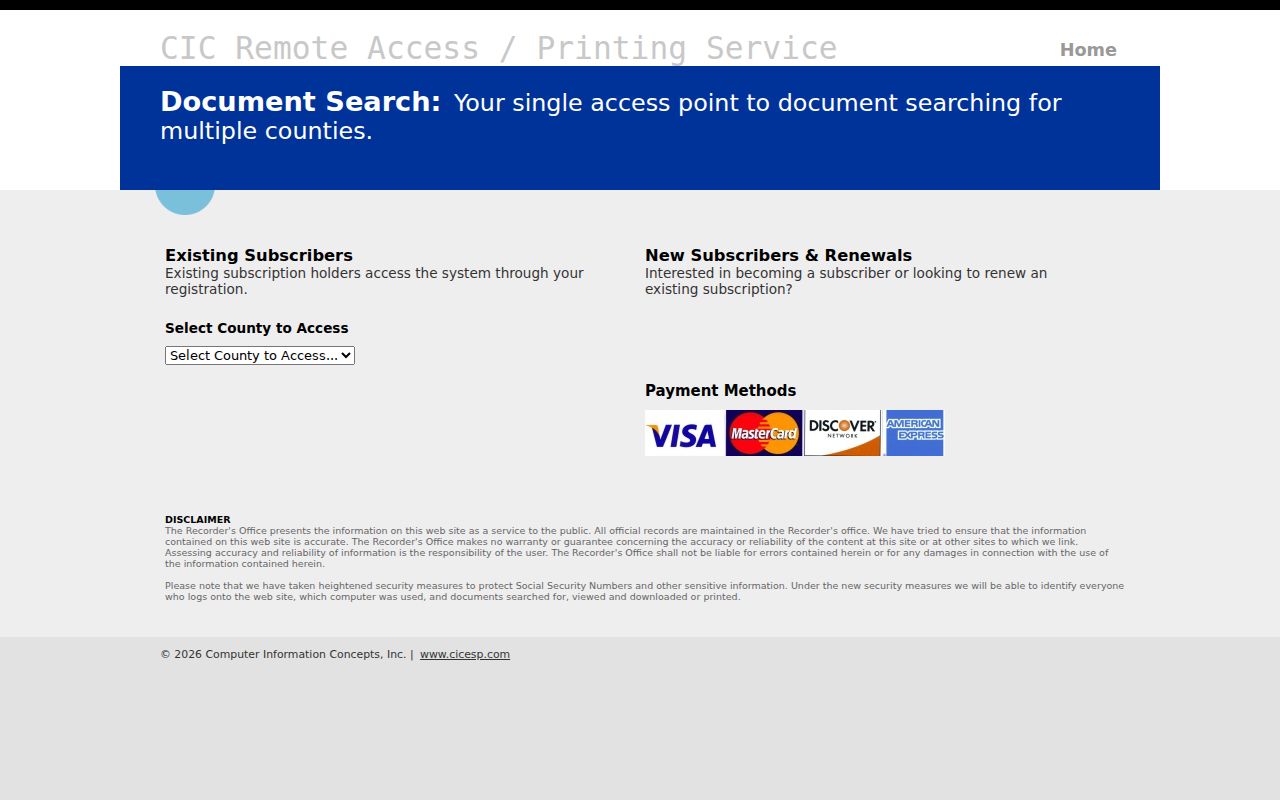
The CIC document host lists Pratt County among its selections. It sells paid short-term or subscriber access. Its entry screen does not state the earliest searchable year. Search party-name variants while you are there. If the interface allows, narrow results by instrument type or date. Save every recording reference before opening or ordering an image.
| Index clue | What to capture | Why it matters |
|---|---|---|
| Party | Grantor and grantee spelling | Connects consecutive transfers |
| Instrument | Deed, mortgage, release, plat, lien | Separates transfers from burdens |
| Recording | Date and book/page or instrument number | Locates the official copy |
| Description | Addition, lot/block, or tract | Keeps the chain on the same land |
Coverage limits stay unpublished. Because absence from CIC proves nothing, ask the recorder to check earlier indexes and deed books for a Pratt County deed.
The Recorder Counter Completes a Remote Search
The Pratt County Register of Deeds office sits at 300 South Ninnescah in Pratt. Mail goes to PO Box 873. The phone number is 620-672-4140. In-person inspection is the surest completeness check, though the office also fills copy requests by phone, mail, email, and fax. Check the current fee schedule before ordering. A focused request works best. Give staff a party name, an approximate date, an instrument type, and a legal description or prior recording reference instead of asking for a full title history. KORA provides another route to existing records, subject to exemptions and copy or staff-time charges.
Recording Requirements Help Explain Rejected Instruments
Pratt County's recording guidance calls for an original signature, proper acknowledgment, a legal description, and the applicable fee. A sales-validation questionnaire or exemption may also apply. These rules explain the gap. A signed private paper that misses them may never reach the official index. Recording gives public notice and a durable reference, but it does not vouch for every statement in the instrument. Compare the details. Check names, authority language, the notary acknowledgment, and the land description. Seek professional help when a chain holds conflicting interests.
The Pratt County Grantor-Grantee Index
The grantor index tracks people or entities giving up interests. The grantee index tracks who received them. To build a chain in Pratt County deed records, start from a known deed and match the same legal description at every step.
- Find the latest deed naming the apparent owner as grantee.
- Read the grantor and exact legal description from that instrument.
- Search the grantor as a grantee to locate that party's acquisition.
- Repeat while logging dates, deed types, references, and description changes.
- Move to office indexes or deed books when CIC coverage ends.
- Grantor
- The party conveying the stated interest.
- Grantee
- The party receiving that interest.
- Chain of title
- The ordered sequence of instruments affecting one tract.
- Book/page or instrument number
- The recorder's locator for the recorded document.
Estate, trust, and divorce transfers break the pattern. Check Kansas CaseSearch and the Pratt courthouse terminal. Those tools surface related probate or title cases, and the recorder holds the instrument that finally changed the land record.
Legal Descriptions Outlast Street Addresses
Older Pratt County deed records often connect through addition, block, lot, section-township-range, or metes and bounds rather than a modern street address. A 2025 Pratt rezoning ordinance shows why. It attaches the action for 223 South Oak to east portions of Lots 5 and 6 in Block 14. The description identifies the land, not the address. Replats, partial tracts, and vacated streets complicate things. Compare the deed against recorded plats and later instruments. Treat ORKA only as a geographic aid.
Historic Pratt Land Research Extends Beyond CIC
When the online chain runs dry, the recorder's deed books and indexes remain the primary trail. History offices can fill gaps. The Kansas Historical Society archives, its Pratt County bibliography, historical newspapers, Pratt Public Library, and the local museum all add name and place clues. They cannot replace the instrument. The recorded deed still governs.
Note: Write down spelling variants and every book-and-page citation, because the next historical index may organize the same party differently.
A structured chain log keeps historical land work organized. Create a row for every instrument and record the grantor, grantee, deed type, execution date, recording date, reference, legal description, and source. Execution and recording dates often differ. When a party acquired several tracts, the name alone is not enough; the land description must follow the same parcel. A quitclaim deed transfers whatever interest the grantor held and should never be described as a warranty of good title.
Names change shape across Pratt County deed records. Search surnames with initials, full given names, prior names, trustee labels, estate captions, and entity suffixes. Check a company through the Kansas Business Entity Search, but do not treat its registered agent as the landowner. For trusts, preserve the trustee and trust wording. For estates, connect probate authority to the recorded conveyance rather than placing a death certificate in the deed chain.
Mortgages, assignments, releases, liens, easements, leases, and fixture filings explain the recorded interest at a point in time. A mortgage may later be assigned or released, and a lien may carry a satisfaction. Read later instruments and match their references before describing a burden as active. Statewide Kansas UCC records supplement county fixture records, though real-property fixture filings still require a recorder check.
Judicial transfers need another verification layer. A foreclosure notice is not a sheriff's deed. Search the docket, inspect the judgment and sale confirmation, then locate the recorded conveyance. Quiet-title and probate matters follow the same division. Court records show litigation or authority. The recorder shows the instrument placed in the land records. Use the Pratt courthouse terminal when CaseSearch does not expose the file.
Plats and ordinances can explain description changes. A replat can replace older lots. A vacation can alter a street. A partial tract can split only part of a lot. The Frisco Addition notice involving vacated streets is a local prompt to retrieve the plat and vacation record. The 223 South Oak action shows how one address can correspond to described portions of two lots.
For KORA, request an existing index entry, instrument image, deed-book page, or plat by reference or a narrow name and date range. The county brochure states that the custodian responds within three business days or explains status, and it permits fees and exemptions. That window does not require staff to build a broad title history. A concise request reduces cost and same-name errors.
A plain copy supports research; a certified copy carries the recorder's certification. Confirm format, delivery, page count, and the current charge. Email or fax may be convenient, but image quality matters when reading legal descriptions, seals, and marginal notes. Preserve the full page and recording stamp rather than cropping the passage that first appears relevant.
Reconcile the endpoint by comparing the grantee on the newest vesting deed with the assessment-roll owner, and report each source date. Pratt County publishes no fixed deed-to-roll lag. A mismatch can reflect processing, an entity variant, a partial conveyance, or a real problem. Ask the recorder and Appraiser rather than choosing one name. A professional title examination addresses priority and unrecorded interests that public indexing cannot settle.
The recorded date should also be distinguished from a sale date shown in appraisal material. A deed may memorialize a gift, trust transfer, estate distribution, corrective conveyance, or court-directed transfer without reflecting an ordinary market sale. Conversely, appraisal records can carry a sale field that needs its own source and interpretation. Report what the instrument says, identify its type, and avoid converting every consideration or validation entry into a purchase-price claim.
When a description changes between links, stop and reconcile the land. Look for a corrective deed, boundary agreement, survey, plat, lot split, replat, vacation, or partial conveyance. Compare the retained and conveyed portions. A chain that follows names while ignoring acreage and exceptions can jump to the subject tract. It may instead land on another property owned by the same person. ORKA may reveal the geographic mismatch, but the recorded text resolves which tract an instrument purports to affect.
Historical newspapers and directories can explain occupancy, business use, or a former street label, but they remain contextual sources. The Kansas Historical Society newspaper database and Pratt Public Library catalog can generate spelling and date leads. Return each lead to the grantor-grantee index and deed books. Occupancy is not ownership, and a newspaper reference cannot substitute for the recorded transfer.
Finish with a completeness note. State the dates searched, which party-name variants were used, whether the recorder counter was checked, and whether the online cutoff remained unknown. Identify missing links rather than smoothing them over. For a transaction or contested interest, give the chain log and copies to a qualified title professional or attorney. That professional can evaluate legal effect and priority.
Read a deed image from top to bottom. Identify the preparer and return address. Note the parties and marital or fiduciary capacity. Check the consideration language, granting clause, and legal description. Review reservations, exceptions, signatures, acknowledgment, and the recording stamp. Exhibits can contain the actual land description, so count and preserve every page. Marginal references can point to corrections, releases, or related filings. If a name in the index differs from the signed instrument, retain both spellings and ask the recorder how it was indexed.
Certified copies prove what the recorder certified from its holdings, not that the conveyance resolved every title issue. For purchase due diligence, a boundary conflict, heirship, or competing liens, combine copies with professional review. This distinction keeps Pratt County deed records useful without overstating them. The index finds instruments. The images disclose their text. Office certification authenticates the copy. A title examination evaluates legal consequences across the chain.
The CIC document-search gateway is the starting point for a remote Pratt County deed search.
Deed research in Pratt County rewards patience. Do not close the chain of title yet. Test for instruments indexed under lenders, trustees, personal representatives, and former entity names. Search both sides of every transfer when the records allow it. Check releases under the secured party's name and under any reference to the original mortgage or lien. When a deed conveys only part of a parcel, compare the remainder description in later deeds. These extra steps often explain why a simple owner-of-record search looks incomplete.
Document quality matters too. A deed image may be faint, clipped, or missing an exhibit. Request another copy instead of guessing at unclear text. Flag illegible words. Never quietly reconstruct calls or names. A certified copy from the Register of Deeds settles questions about authenticity and completeness. A surveyor or attorney may still be needed to interpret ambiguous property language.
One last sweep should cover spelling and indexing risk. Reverse surname order. Try initials. Drop punctuation from entity names, and search a narrow date range around the known recording. An instrument may cite an earlier book and page. Pull that document even if the party name differs. Cross-references inside corrective deeds, releases, and assignments are often more dependable than a broad name match. Keep a log of dead ends, since it shows which variants and dates were actually searched.
For historical depth, ask the Pratt County office directly. Ask whether its index, deed books, microfilm, or another local format reaches earlier than CIC. Do not assume a cutoff. Pratt County has posted none. Verify coverage with the recorder, and use Kansas Historical Society or library material only to gather more names and dates. The county's recording-requirements page supplies the official filing checklist.
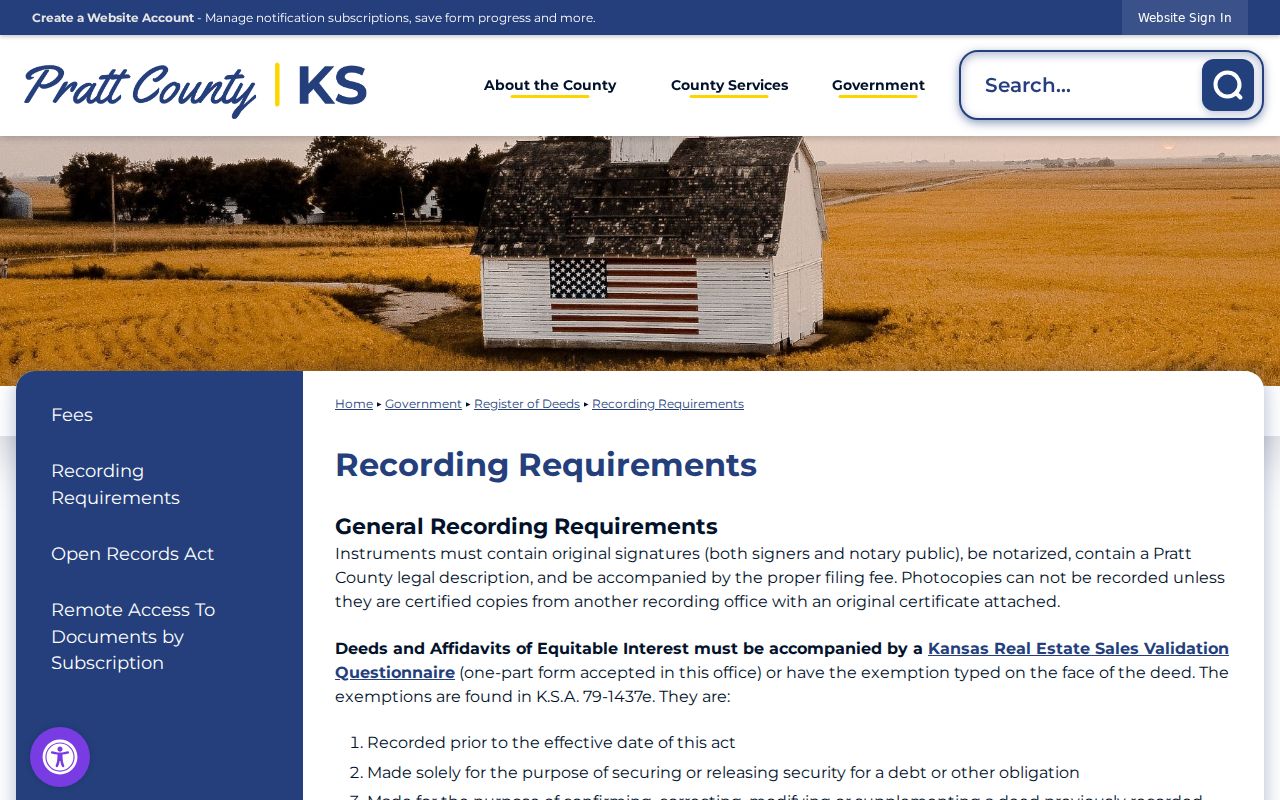
The official guidance requires signatures, acknowledgment, a legal description, and the correct filing materials. Review the Pratt County recorder fee page before requesting images or certified copies.
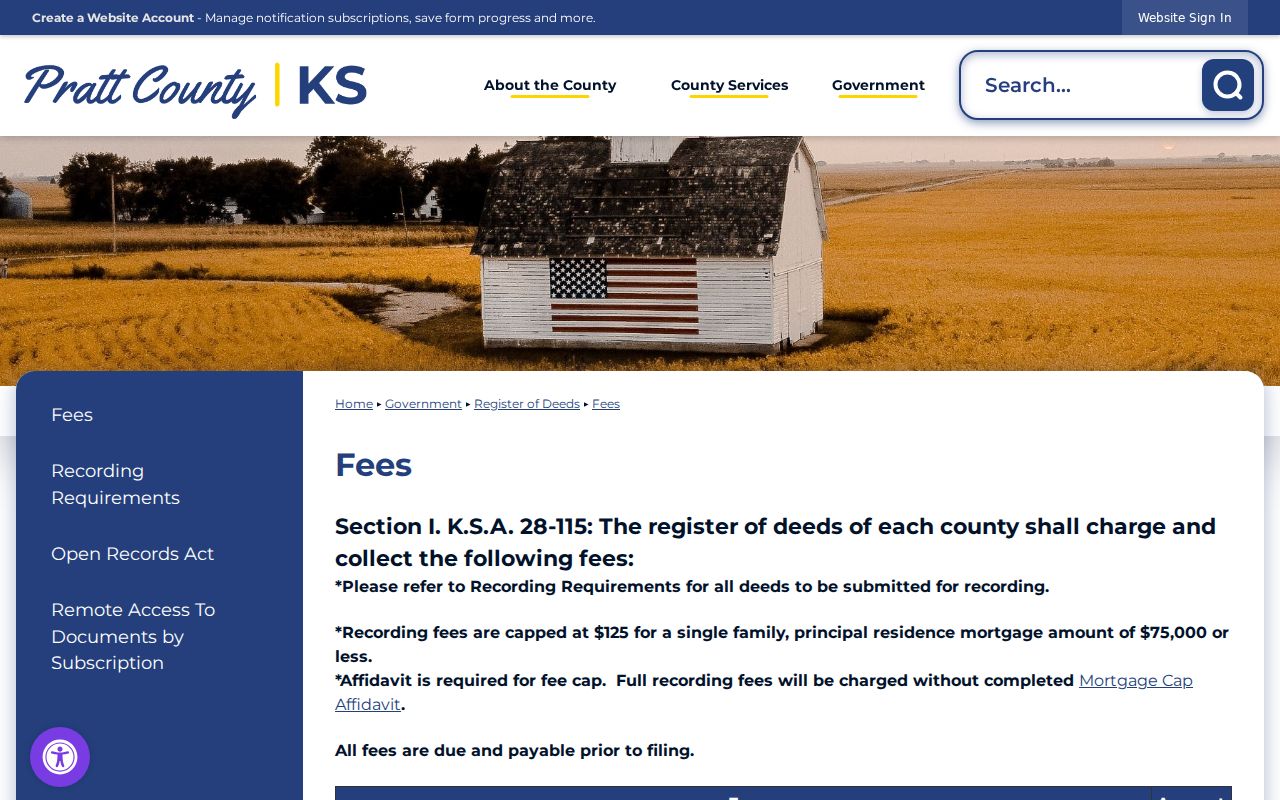
Treat the published fee schedule as the current official source. Confirm the page count and delivery method with the Pratt County office before authorizing any charge.
Get a Copy of a Pratt County Deed
Use CIC when the deed image is available under your access plan. Otherwise, give the Pratt County Register of Deeds the recording reference. Then ask for a plain or certified copy by counter, mail, email, or fax. Confirm the current price before ordering. Confirm the delivery method too, rather than trusting an old fee quote. Certification authenticates the custodian's copy of the deed record. It does not insure title.
Recorded, not guaranteed. Pratt County deed records show instruments accepted for recording. They do not resolve every unrecorded interest or provide a title opinion.