
Find Out Who Owns a Pratt County Property
No single Pratt County screen settles ownership. The county splits the answer between two offices. Match the Appraiser's administrative property data against the Register of Deeds' latest conveyance, keeping the parcel identifier and legal description in view throughout.
- Give the situs address to the Appraiser and obtain the parcel number, owner or taxpayer name, mailing address, and roll year.
- Use that exact name and legal description in CIC or at the Register of Deeds counter.
- Read the grantee and recording date on the newest deed conveying the same land.
- Check for a later corrective deed, probate order, sheriff's deed, or other conveyance.
- Report each source and date, including any mismatch.
An address is only a starting clue. If it fails, retry with additions, block and lot, section-township-range, or the account number printed on a county notice.
Ask Pratt County for the Assessment Owner
The Pratt County Appraiser maintains property data. The office publishes no public parcel-card link, so contact it for the details. Ask for the owner or taxpayer field. Request the roll year, situs, mailing address, parcel number, and any deed reference. The Clerk processes roll transfers. A recent conveyance can therefore lag behind the administrative name. The county states no fixed deed-to-roll delay either. Date any response you get. A mailing address only routes notices, and it proves nothing about who occupies the site. Note: Never merge a tax-roll name, business result, or foreclosure notice without the instrument connecting it to the parcel.
Confirm Pratt County Ownership at the Recorder
The Register of Deeds records deeds, mortgages, plats, easements, leases, liens, releases, powers of attorney, and UCC fixtures. Only a conveyance creates a new grantee. Mortgages and releases can name parties without moving ownership at all. The county links to paid CIC access but publishes neither its cutoff year nor a full Pratt search form. Use the counter when the web route stalls. Copies work by mail, email, fax, and phone. A focused KORA request can name a parcel, legal description, instrument, or date range. The county-linked CIC entry starts the remote check.
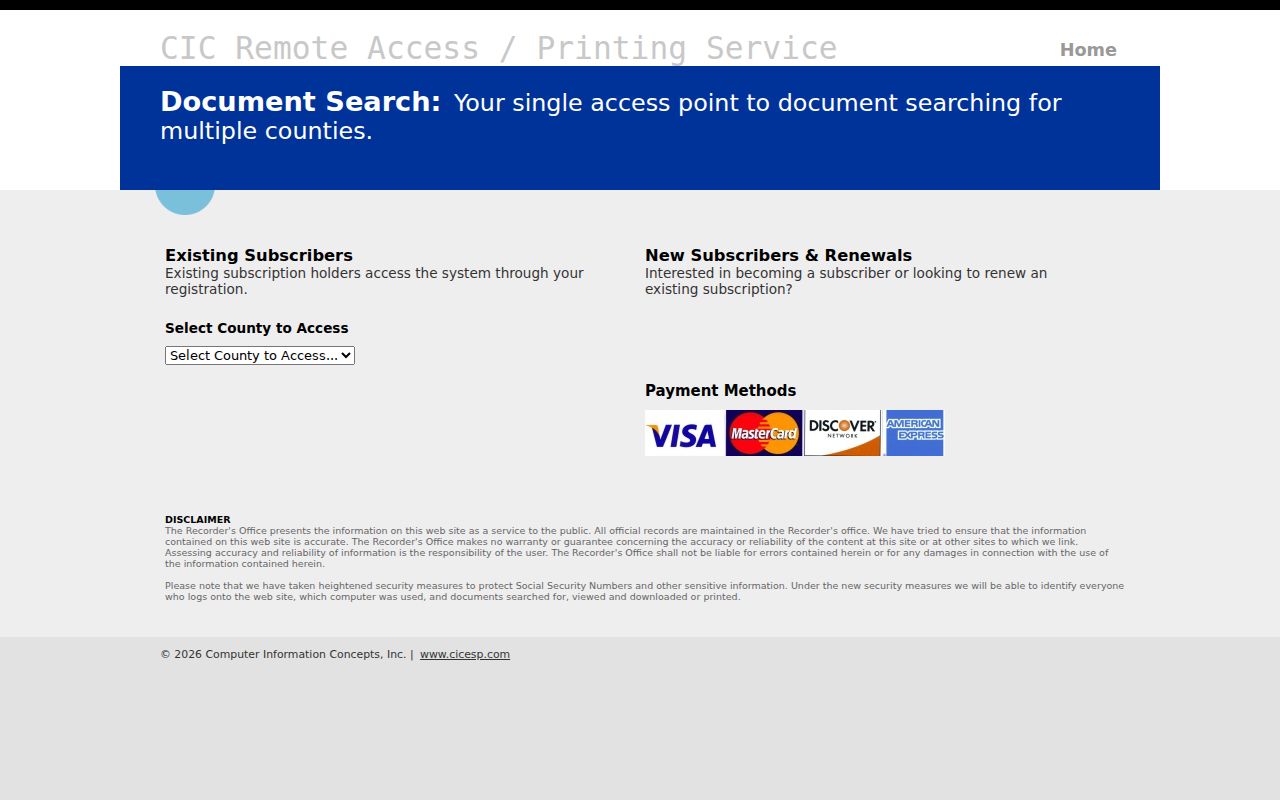
With local coverage and fields hidden, use the recorder counter.
Compare Pratt County Property Owner Sources
Each official source answers a different part of the ownership question. Tag every result with its source and date.
| Source | Owner Info It Gives | Access |
|---|---|---|
| Appraiser / Clerk roll | Administrative owner, mailing address, parcel and roll year | Office request |
| Register of Deeds | Grantee and legal description on the latest conveyance | Paid CIC or office |
| Secretary of State | Filed identity of a corporation or LLC | Public business search |
| ORKA map | Address, lot, block, road and subdivision context | Public ArcGIS experience |
The roll names an administrative owner, not an occupant. The latest deed remains the stronger evidence of a current conveyance.
Resolve a Pratt County Entity or Estate
Copy an LLC name exactly as printed. The Kansas Business Entity Search accepts a name, business ID, or resident-agent name and caps results at 200. It separates real entities from lookalikes. An agent, though, is not automatically the owner. With a trust or estate, read the vesting language and use Kansas CaseSearch when probate may explain who holds authority. A restricted death certificate is not the transfer; the probate order, affidavit, or recorded deed completes the land trail.
Match Pratt County Land by Legal Description
County notices reference subdivisions such as Summit Addition and Hoppers Resurvey in Pratt, Fairmount Addition in Iuka, and Cogswell Addition in Preston. Rural tracts often use section or metes-and-bounds wording. Preserve every block, lot, and parcel number exactly as printed. Addresses can change or cover several units. Match the deed's formal description before treating its grantee as the owner. A foreclosure notice is only a lead. Follow the docket and any recorded sheriff's deed.
Use Pratt County Maps Only to Identify the Parcel
The Kansas ORKA experience and its KGS service expose address points, subdivisions, lots and blocks, roads, city limits, and county boundaries. Those layers turn an address into a land description. Maps alone do not establish vesting. City of Pratt mapping adds utility, easement, aerial, GPS, and flood-zone context. Pratt's planning jurisdiction reaches three miles past the edge. Read that material alongside the county zoning map. Match the map candidate to the recorded plat or deed. Only then attribute an owner.
Date Every Pratt County Ownership Answer
A useful answer carries more than a name. Record the owner named in the instrument, its recording date and reference, the tax-roll owner, the roll year, and the date each source was checked. Deed, transfer, and map dates can all differ. Never average the two names. Ask the recorder about later conveyances. Then ask the Appraiser or Clerk which roll produced the administrative name. That pair is the honest interim answer. It tells you who owns a Pratt County property, and exactly what evidence stands behind the name while the systems catch up. Note: An execution date and a recording date describe different events, so keep both when the deed provides them.
Follow Every Pratt County Access Channel
Remote tools are just one branch of the Pratt County property search. CIC hosts the recorder's paid index. Its coverage start, wildcard behavior, date filters, and image gating are not published. An empty result does not mean no deed exists. Contact the Register of Deeds before giving up. The county welcomes counter inspection and copy requests by mail, email, fax, and phone. Fees apply to copies and remote access under its fee schedule.
Start with the Appraiser for assessment data. Ask for a parcel-specific result or a bounded street list. The Clerk explains roll transfers, legal descriptions, taxing districts, levy sheets, and special assessments. A narrow KORA request helps when routine channels fail to locate an existing record. Name the custodian, address, parcel, legal description, instrument type, and date span. The county brochure directs the custodian to respond within three business days. It can also explain the status instead. Seek records, not research. A staff-drawn title conclusion is not part of the request.
Test Pratt County Court and Foreclosure Leads
Kansas CaseSearch can surface probate, foreclosure, lien, divorce, or quiet-title cases. An odd name in the owner trail may have a case behind it. Search by party, case number, case type, or date. Online dockets run thin sometimes. Inspect the Pratt courthouse terminal or request the court file. A docket entry stays a lead. The judgment or order must be read and matched to the land.
Tax foreclosure work needs the same discipline. The Treasurer refers real-estate taxes unpaid for three years to the county counselor. Published notices may list a taxpayer, parcel number, situs, tax year, amount, and legal description. Payment, dismissal, redemption, or sale confirmation can change everything. The owner answer sits in the final record sequence, not in the first notice. That sequence includes any sheriff's deed or later conveyance.
Document the Pratt County Owner Result
A clean owner report opens with the basics. List the subject address, parcel or account number, and legal description. Add the assessment owner or taxpayer, mailing address, and roll year. Then include the recorded grantee, deed type, recording date, and instrument or book-and-page reference. A business, trust, estate, or fiduciary may be named. Reproduce that capacity exactly. Do not turn a registered agent, beneficiary, or representative into the owner of record.
State the unresolved limits too. Pratt County publishes no universal roll-update interval. The CIC coverage start is unknown. The public Appraiser page offers no parcel-card search screen or exact owner-field label. None of that justifies omitting an answer. It justifies accurate attribution and a pointer to the responsible office. A documented mismatch beats an unsupported claim of certainty.
This record format supports lawful purchase review, easement questions, estate work, house history, and deed-fraud checks. It cannot establish occupancy. It cannot survey a boundary. Nor can it replace a professional title examination when rights or money ride on the outcome.
What a Pratt County Owner Lookup Cannot Prove
This method can pin down a dated roll name. It can also identify a recorded grantee, a parcel key, and a legal description. It cannot reveal an unrecorded interest. It cannot rank liens, fix a surveyed boundary, or prove who lives in the house. ORKA supplies spatial context. It is not a survey.
Use these records for purchase diligence, deed-fraud review, boundary research, estate work, or house history. Get a title search or legal advice when a deal depends on clear title.
Keep negative results as carefully as successful ones. Note every spelling and name order tried, plus any entity suffix and the address form. Capture the parcel number, legal description, and date span. Say whether the attempt ran through CIC or through county staff. A failed address search is not the end. A legal-description or party-name search may still locate the deed. If a business changed names, compare its filed identity with the instrument. Save any court case number before returning to county recordings.
A complete owner answer also discloses what was left unchecked. Liens, mineral interests, easements, marital rights, probate claims, and unrecorded interests exist. These may call for a broader title review. The method targets the best dated public record. It does not certify that the grantee holds every interest free of claims.
Public-record access does not erase privacy duties. Kansas Safe at Home provides substitute-address protection. KORA restricts certain uses and disclosures. Do not republish sensitive address data just because one official file was open for inspection. Limit the output to the parcel research purpose and the facts needed to reproduce it.
Owner name is not title proof. A roll may lag, and ownership may sit in an LLC, trust, or estate. Verify the newest conveyance and never use owner data to stalk, harass, or harm anyone.