
What Pratt County Property Tax Records Show
Figuring a Pratt County tax bill takes three offices. The Appraiser develops property characteristics and value. The Clerk maintains the roll, taxing districts, levy sheets, transfers, and special assessments, while the Treasurer sends the bills and takes the payments.
| Field | What It Shows | Where |
|---|---|---|
| Property and market value | Appraiser's January 1 estimate and supporting parcel facts | Appraiser |
| Assessed value | Taxable value after the statutory classification ratio | Appraiser / roll |
| Levy and districts | Rates and jurisdictions applied to the parcel | County Clerk |
| Special assessments | Parcel-specific charges outside ordinary valuation | County Clerk |
| Bill and status | Amount billed, payment, balance, or delinquency | Treasurer |
Assessed value and market value differ. Kansas law applies classification ratios under K.S.A. 79-1439, then levies and any relevant charges build the final bill. A prior arm's-length sale informs appraisal work, not the tax itself.
Pratt Appraisals Use a January 1 Snapshot
The Pratt County fair-market-value guidance explains that real property is valued as of January 1. Changes in improvements, use, neighborhood conditions, and market evidence can affect the next value. The county reports a six-year physical-inspection cycle while still issuing annual valuation notices.
More than 14,000 notices are part of the county's annual appraisal process. The notice explains value, not the final bill. Record the notice date because the ordinary appeal period runs from mailing, not from when a later tax statement arrives.
Definition: Market value is the appraisal estimate for the valuation date; assessed value applies the statutory class ratio; a levy converts assessed value into tax; a tax lien secures unpaid tax.
Comparable Sales in Pratt Are Adjusted, Not Copied
The Appraiser's adjusted-sales explanation says staff typically compare five sales and adjust for differences. A nearby sale is not automatically comparable. Sharing a ZIP code proves nothing. That distinction matters when you challenge a value.
A Pratt comparable-sales report can list finished and unfinished living area, bedrooms, baths, HVAC, basement, quality or condition, garages, sale date and price, regression figures, adjusted sale, prior value, market value, and indexed value. Verify the county's recorded characteristics first. Then argue from price.
The County Clerk Explains the Levy Side
The Pratt County Clerk maintains levy sheets and taxing districts. That office also handles special assessments, certified rolls, and transfer updates. Ask that office why a jurisdiction or special charge appears. Take classification, characteristics, or value disputes to the Appraiser. Take balance and payment questions to the Treasurer.
This division avoids a dead end. Contesting a bill with an office that controls only one component wastes a trip. Bring the parcel number and tax year. Bring the notice or statement and the exact disputed field.
Look Up a Pratt County Tax Bill
The Treasurer holds the official balance. Kansas.gov offers an online payment entry. Its county-specific fields appear only after county selection, and the workflow expects details straight from the tax statement.
- Identify the parcel and tax year from the statement or county record.
- Use Kansas Property Tax Payment or contact the Treasurer at 620-672-4116.
- Separate current amount, paid amount, remaining balance, and any prior-year delinquency.
- Check valuation and classification with the Appraiser and levy context with the Clerk.
- Verify any delinquency, publication, court filing, and eventual recorded disposition independently.
- Assessed value
- The classified amount to which levies apply.
- Mill levy
- A rate expressed per thousand dollars of assessed value.
- Relief or exemption
- A program with its own legal qualifications and application rules.
- Tax lien
- The public claim securing unpaid property tax.
Delinquency Does Not Equal a Completed Sale
Pratt County's delinquency guidance describes referral after three years and publication in The Pratt Tribune. Publication starts a paper trail. It does not prove title changed. Track the docket, judgment, sale, and confirmation. Then search the Register of Deeds for a sheriff's deed or later conveyance.
Note: Always get a fresh Treasurer balance, since costs, payments, redemption events, and proceedings can change after a published list.
Get Pratt Tax Records Without a Public Parcel Portal
Pratt County publishes no official public parcel-card portal. Phone, mail, and counter access fill that gap. The Appraiser, at 300 South Ninnescah, PO Box 966, Pratt, supplies property data and comparable-sales information, while the Treasurer at the same courthouse address handles balances.
For a roll, levy sheet, or property record not otherwise available, send a narrow request under the county's Kansas Open Records Act procedure. Identify the parcel, record, and year. The county allows three business days. That deadline requires a response or status explanation, not instant completion.
A complete Pratt County tax worksheet holds many fields. Expect parcel number, situs address, owner mailing name, valuation date, class, market value, and assessed value. Districts, levy, special assessments, statement year, amount billed, payments, and balance belong on the sheet too. Never mix years. The January 1 appraisal supports a bill issued later, and a transfer can reach the tax roll on its own schedule. Label each field with the office that keeps it.
Property characteristics matter as much as price. Living area, bathrooms, HVAC, basement, garage, quality, and condition all shape a comparison. Inspect the inventory first. A house next door is not automatically comparable. Pratt adjusts differences across five sales rather than copying one price. When a figure is unclear, request the adjustment worksheet.
Kansas classification rules split market value from assessed value. K.S.A. 79-1439 sets the assessment ratios. K.S.A. 79-501 directs fair-market appraisal unless another method applies. Agricultural land can follow use-value rules instead. Confirm classification and land use before estimating tax from market value alone.
A levy stacks several districts. County, city, school, and other units all contribute. Clerk records explain which units applied to the parcel. Special assessments are separate and parcel-specific, so keep them out of the ordinary levy unless someone explains the difference. When similar parcels carry different bills, compare class, assessed value, district, special assessment, and relief before assuming an error exists.
Payment research needs a current source. Kansas.gov accepts payments but requires county selection and statement details, so it is a payment route rather than a full property records portal. Ask the Treasurer to confirm balance, method, and prior-year amounts. Save the receipt. An old screenshot or publication is not today's balance.
Delinquency moves in stages. Pratt County points to a three-year referral and newspaper publication, yet a parcel can still be paid, redeemed, litigated, sold, or resolved afterward. Trace the notice to the docket and courthouse file. Then check the recorder for a sheriff's deed. Publication alone is not a completed transfer.
Relief programs require the correct current form. Never infer eligibility from age, occupancy, disability, service, or any other personal fact. The Kansas forms route provides official materials, and county staff can direct a filing. Note the year and whether relief changes appraisal, assessment, or the tax itself.
Without a public parcel card, make a focused request. Give the Appraiser the address, parcel identifier, year, and the fields you need. Ask the Clerk for levy, district, transfer, or special-assessment records. Ask the Treasurer for statements and balances. KORA reaches existing open records but does not require custom appraisal analysis.
Prepare appeal evidence for the valuation date. Photographs should show conditions as they existed then. Measurements should identify the disputed field. Estimates should explain physical problems. Sales must be close enough in date and characteristics to matter. Review each adjustment and present field-by-field evidence instead of simply saying the tax is high.
Annual practices explain why a record changes without a transaction. Pratt County follows a six-year physical inspection cycle, yet valuation happens every year. A new improvement, demolition, classification change, market study, or corrected characteristic can move the next notice. Ask which fact changed. Ask which valuation date applies. Do not presume every increase came from a sale.
The 2026 market-study statements on the Appraiser page and the Kansas Department of Revenue ratio studies give countywide context, not parcel evidence. A ratio study measures assessment performance across a group. It does not set one home's value. Use the broad statistics to frame a question, then return to the subject property, its verified characteristics, and suitable comparable sales.
Transfer timing deserves its own notation. The Register of Deeds records conveyances. The Clerk processes roll transfers. The Appraiser and Treasurer rely on their own records for valuation and billing. Pratt publishes no fixed lag among these steps. After a closing, compare the newest deed with the roll and statement, and ask whether a bill still carries the prior owner's name or mailing address.
Keep appraisal disputes separate from payment obligations. Filing an appeal does not by itself mean no tax is due. Paying a bill does not necessarily waive every valuation route. Get current instructions from the Appraiser and Treasurer for the year involved. Record deadlines, confirmation numbers, hearing dates, and every document submitted so the administrative file stays complete.
A final tax-record review should answer four questions independently. What did the county value? How did Kansas classification produce assessed value? Which districts and charges applied? What does the Treasurer currently show as paid or due? Summarize a total only after those fields reconcile. If one is missing, state the gap and point to the responsible custodian rather than estimating.
Save the annual notice even after a hearing. It fixes the starting value and mailing date. Keep the appeal form, delivery proof, evidence packet, county worksheet, hearing notes, and written decision together. If an informal result changes a characteristic or value, verify the revised figure reaches the later roll and statement. A favorable decision in one year does not carry indefinitely when property facts or market evidence shift.
Comparable-sales research must exclude unsupported assumptions. Confirm each transaction was open-market. Check whether personal property or unusual financing affected price. Confirm the sale date fits the valuation period. Review finished area, basement treatment, garages, quality, condition, and location adjustments. Pratt's report fields give a consistent framework, but relevance still depends on the subject parcel and January 1 conditions.
For special assessments, request the authorizing record and parcel application from the Clerk. Determine whether the amount is annual, installment-based, delinquent, prepaid, or otherwise reflected in the statement. A special assessment is not the Appraiser's valuation. For taxing districts, verify the parcel's location against certified records rather than a mailing address, especially near municipal boundaries.
Tax-sale due diligence extends beyond a public notice. Check who was named. Check whether service and judgment occurred. Look for redemption or payment in between, sale confirmation, and a recorded deed. Then review later releases and conveyances. The sequence matters because one historical notice cannot reveal the parcel's current tax balance or its owner of record.
When requesting records remotely, specify the delivery format. A roll extract may be easier to review electronically. A certified statement or court document may require another form. Ask about staff time, copy, or certification charges before authorizing a broad request. The narrowest useful query includes parcel number, situs, owner name if known, record year, and the exact fields needed. Note: the Pratt County comparable-sales page is the official route to appraisal comparison material.
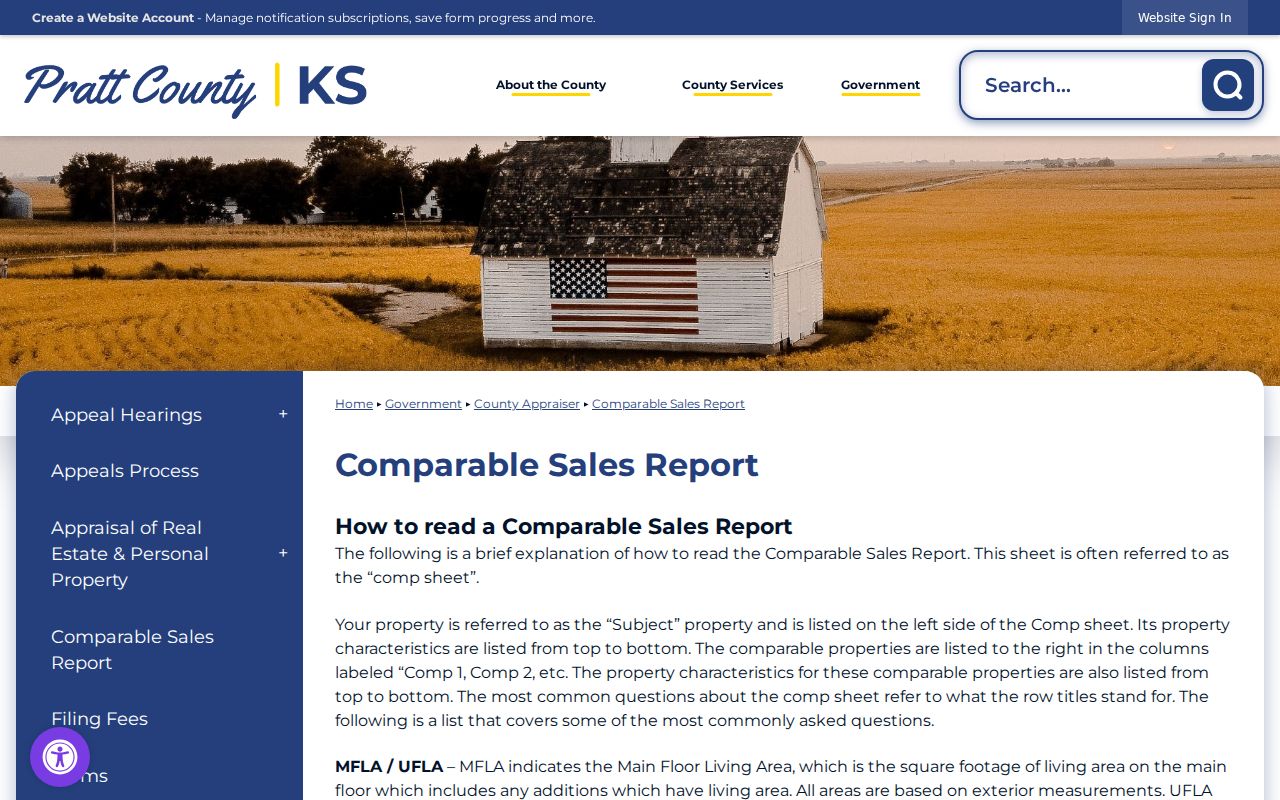
Pratt County publishes the official page itself. The figures shown there still need to be matched against the parcel and the valuation date before you rely on them.
For payment, the state offers the Kansas property-tax payment gateway, which covers every county in Kansas.
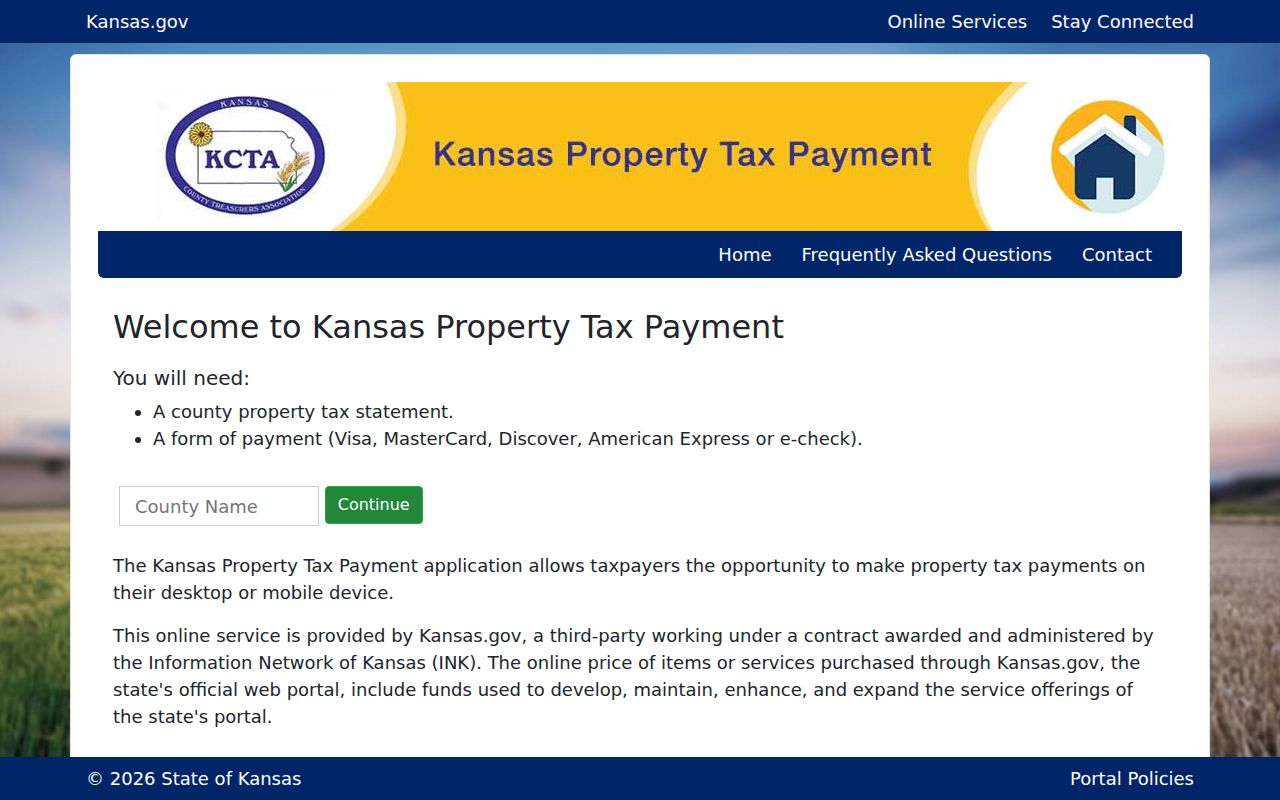
That statewide gateway asks for a statement number and a county before it does anything. It handles payment, not a parcel search. The Pratt County Appraiser remains the place for a full property search by parcel number.
Comparing tax bills across years takes care. The change may come from market value, a new classification, construction, land use, district levies, or special assessments. It may also come from a corrected record. Several factors can shift at once. Check each component against its official source. Do not blame the biggest number on the statement. The county property-appraisal page walks through the notice and inspection cycle. That cycle drives the annual values.
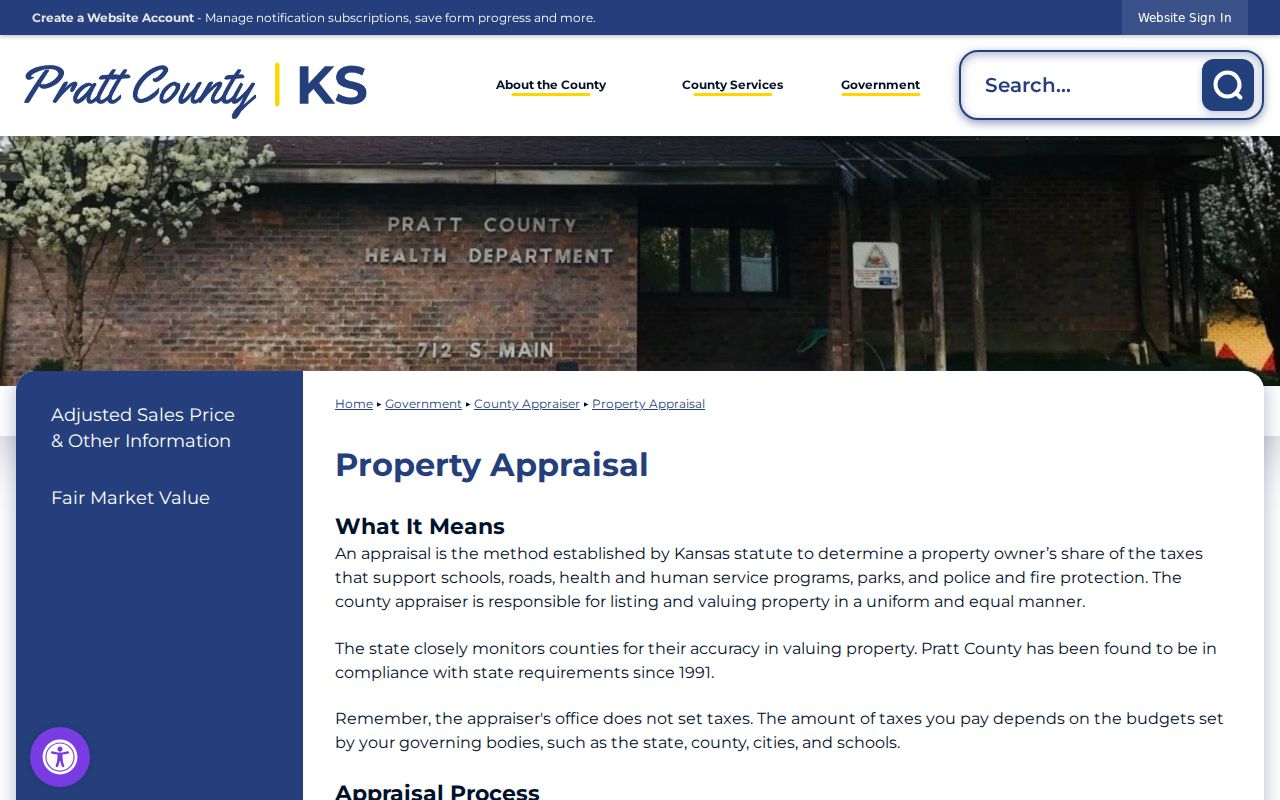
Annual county guidance is helpful background, but the notice mailed for a specific parcel is what counts. For questions, the Pratt County Appraiser page reaches the office directly.
The Pratt County Appraiser holds the property characteristics, market studies, and parcel-level valuation data you may need.
Appeal a Pratt County Assessment
An appeal in Pratt County starts with an informal hearing before the Appraiser. Focus on factual errors, classification, and market evidence that fits the parcel. The ordinary deadline is 30 days. It runs from the valuation notice under the Kansas property-tax calendar. Telephone hearings and county forms are available. Later steps can reach the state Board of Tax Appeals.
Bring photographs, measurements, repair estimates, a corrected property inventory, and well-matched sales. The county responds better to reviewed comparisons than a bare list of prices.
Appeal window. File within 30 days after the Pratt County valuation notice is mailed. Waiting for the tax bill can forfeit the ordinary valuation appeal.